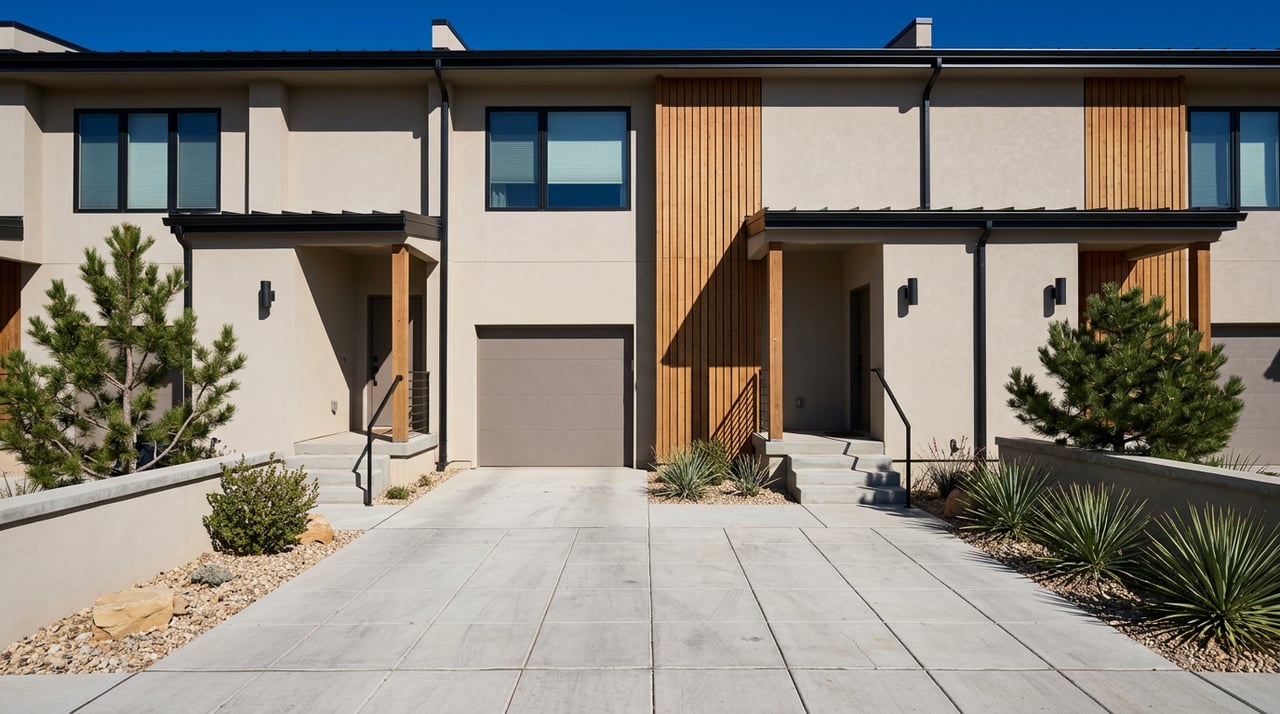
Thinking about a condo or townhome in Grand Junction but not sure where to start? You want low-maintenance living and a clear picture of monthly costs before you make a move. In this guide, you’ll see current prices, how HOA fees work here, the financing rules that can trip buyers up, and a simple checklist to protect your budget. Let’s dive in.
Grand Junction prices at a glance
Mesa County’s overall rolling median sales price was about $405,000 in January 2026, while the townhouse/condo median was about $332,500. You can verify both figures in the local Colorado Association of REALTORS and ShowingTime market update for Mesa County. See the latest snapshot in the official report for context on where attached homes sit relative to single-family homes. View the Mesa County market update (Jan 2026).
What this means for your budget
Attached homes here often price below single-family homes, though the gap varies by neighborhood and building type. High-amenity buildings can narrow that gap, while smaller associations may run lower. Focus on the total monthly cost, not just the sticker price, since HOA dues and insurance can shift your true payment.
What HOA fees look like in GJ
In Grand Junction, condo and townhome HOA dues vary widely. Local examples show some smaller or older communities in the $40 to $100 per month range when amenities are limited. Mid-range communities like Fountain Greens or Thunder Mountain often run roughly $145 to $205 per month. High-amenity buildings like Lakeside can land $300+ per month, especially when multiple utilities and shared facilities are included.
What dues usually cover
Typical HOA coverage can include exterior building maintenance (roof, siding, gutters), common-area landscaping and lighting, snow removal, shared utilities (sometimes water, sewer, trash), building or master insurance, management, amenities, and reserves. Exact coverage depends on the association’s legal definitions and insurance policies, so you need to review both the master policy and the CC&Rs to understand your responsibilities. For a quick primer on how HOA insurance lines up with owner obligations, read this summary of what HOA policies commonly cover. Learn more about master policy vs owner coverage.
How to evaluate the fee
- Add the monthly HOA to your mortgage, taxes, insurance, and utilities to compare options fairly.
- Confirm exactly what the HOA covers and what is on you (especially water, trash, and building insurance).
- Ask if there are separate fees for garages, storage, or amenities.
- Check the reserve plan to see if dues are likely to rise soon.
Colorado HOA rules to know
Colorado HOAs operate under the Colorado Common Interest Ownership Act (CCIOA). It governs budgets, disclosures, assessments, liens, and association powers. This framework shapes what you receive during a sale, how assessments are handled, and how financials should be presented. For a plain-English overview, see the CCIOA background resource. Read a CCIOA overview.
Resale packet timing and cost
During a condo or townhome sale, you or your lender will request a resale packet (sometimes called an estoppel or resale certificate). In Colorado, associations commonly charge about $100 to $400 for this packet, and delivery times often run about 7 to 14 days. Order it early in escrow so you have time to review budgets, reserves, insurance, and any pending assessments. See typical resale packet costs and timelines.
Reserves, assessments, and red flags
Healthy reserves help an association handle big repairs without sudden special assessments. After national condo-safety discussions, many groups emphasize better reserve transparency and planning. In Colorado, policymakers have debated reserve and safety rules in recent years, so it’s smart to review how your target association funds long-term items. Get reserve context from a state-by-state roundup.
Watch for red flags in the resale packet: very low reserves, a recent or pending special assessment, frequent insurance deductible assessments, or pending construction-defect litigation. Any of these can affect monthly costs or delay financing. If you see a red flag, pause and review with your agent and lender before moving forward. See common HOA red flags to investigate.
Financing condos and townhomes
Condos have project-level rules that can affect your loan. FHA loans require either project approval or single-unit approval when the building is not preapproved. Your lender will request HUD condo questionnaires and check insurance, reserves, owner-occupancy, and more. Ask your lender about the project status early to avoid delays. Review HUD condo forms and guidance.
For conventional loans, many lenders follow Fannie Mae or Freddie Mac standards. If a project does not meet those standards, it is often called non-warrantable, which can limit lender options or require larger down payments. Pending litigation, high investor concentration, or weak insurance and reserves can be issues. See how lenders evaluate warrantability.
Down payment snapshot
- FHA: minimum down payment often 3.5%, subject to current underwriting rules. Confirm FHA minimums.
- VA: 0% down for eligible buyers when the project meets VA standards. Review a VA loan overview.
- Conventional low-down-payment options exist, but eligibility depends on income limits, property type, and project status. Your lender will confirm whether the specific building is eligible under current guidelines.
Townhome vs condo: why title matters
“Townhome” describes a look and layout, but the legal structure can be fee-simple or condominium. A fee-simple townhome often underwrites like a single-family home, while a condo-titled townhome follows condo project rules. Always confirm the recorded property type before finalizing your loan strategy. Understand fee-simple vs condo-titled townhomes.
Build a clear monthly budget
To compare a condo or townhome with a similarly priced single-family home, line up all recurring costs:
- Principal and interest (based on your down payment and rate)
- Property taxes (use a Mesa County estimate, then verify during escrow)
- HOA dues (and any extras for garages or amenities)
- Insurance (HO-6 condo policy or homeowner’s policy, plus any required loss assessment coverage)
- Utilities not covered by the HOA
- A cushion for occasional special assessments
Buyer checklist for Grand Junction condos and townhomes
- Request the full resale packet: CC&Rs, bylaws, recent meeting minutes, current budget, reserve balance or study, and insurance declarations. Verify the fee and turnaround time. Typical costs and timelines.
- Confirm what the HOA fee covers, including building insurance details and deductibles. Ask about any history of loss assessments.
- Review reserves and the 5 to 10 year plan. Look for pending or recent special assessments. Reserve planning overview.
- Ask your lender if the project is FHA/VA approved or conventional-warrantable. If not, discuss whether single-unit approvals or alternative loan options are realistic.
- Check owner-occupancy, investor concentration, and any current litigation. These can affect eligibility and pricing.
- Compare total monthly cost: mortgage, taxes, HOA, insurance, utilities, and a buffer for the unexpected.
Next steps
You do not have to guess your way through HOA documents or condo financing rules. If you want a clear view of options across Grand Junction, Fruita, Clifton, the Redlands, and Orchard Mesa, reach out for practical guidance and fast market exposure to suitable listings. When you are ready to take the next step, connect with Josh Mcguire for a quick consult and current inventory.
FAQs
What are current condo and townhome prices in Mesa County?
- The Mesa County townhouse/condo rolling median was about $332,500 in January 2026, compared with $405,000 overall, per the local REALTOR and ShowingTime update. See the report.
How long does the HOA resale packet take and what does it cost in Colorado?
- Many associations charge about $100 to $400 and deliver in about 7 to 14 days, though timelines and fees vary by community. Review typical costs and timing.
What are the biggest red flags in a condo HOA for buyers?
- Very low reserves, recent or pending special assessments, frequent large insurance deductibles, or pending litigation are all reasons to slow down and investigate further. Learn more about red flags.
Can I use FHA or VA financing to buy a Grand Junction condo?
- Yes, but the condo project must meet program rules; FHA may allow single-unit approval when the project is not preapproved, and VA has its own approval process. Start by asking your lender about project status. Check HUD condo guidance.
Why does it matter if a townhome is fee-simple or condo-titled?
- Fee-simple townhomes often underwrite like single-family homes, while condo-titled townhomes follow condo project rules that can affect loan eligibility, rates, and timelines. Understand the difference.